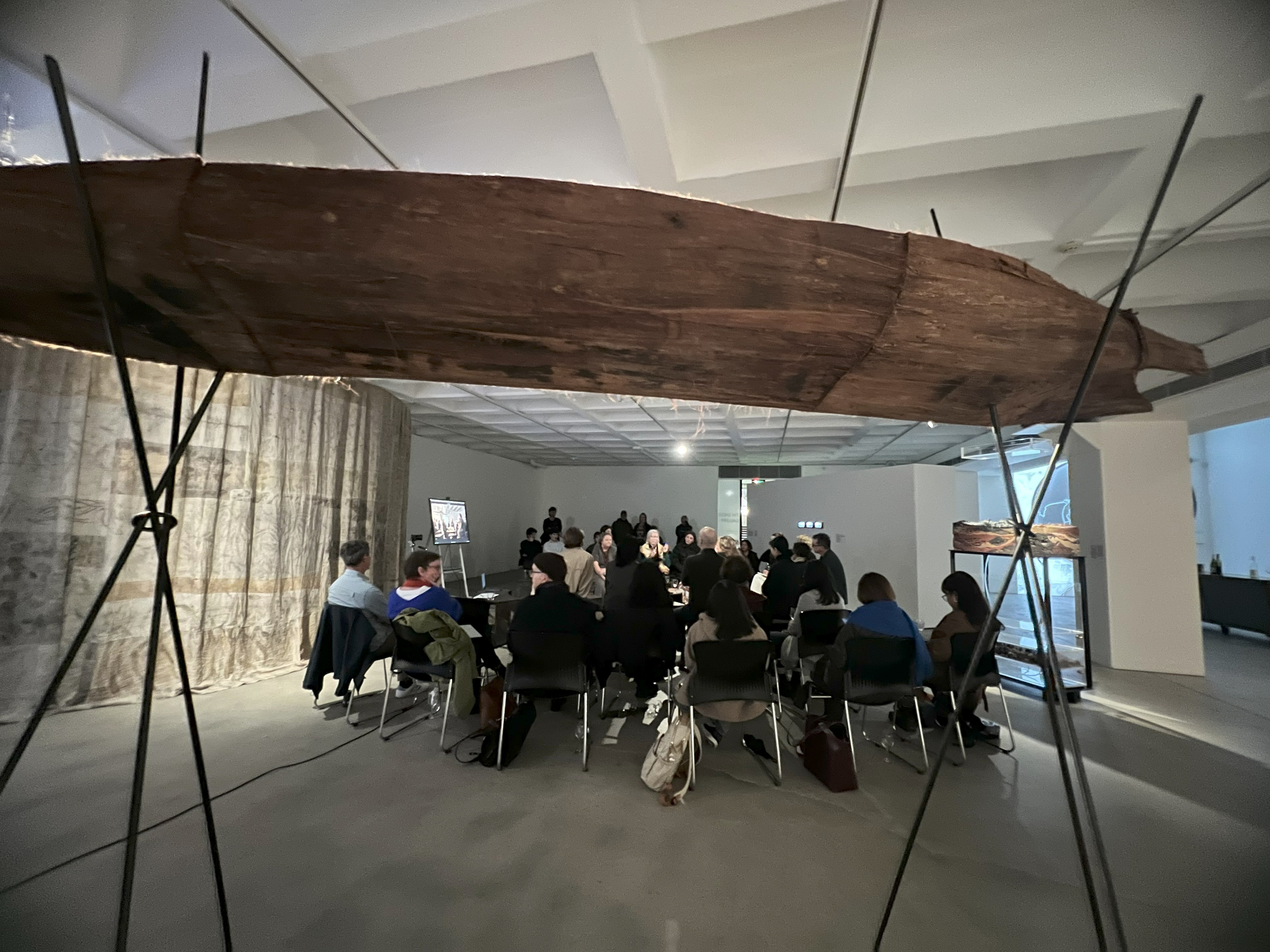
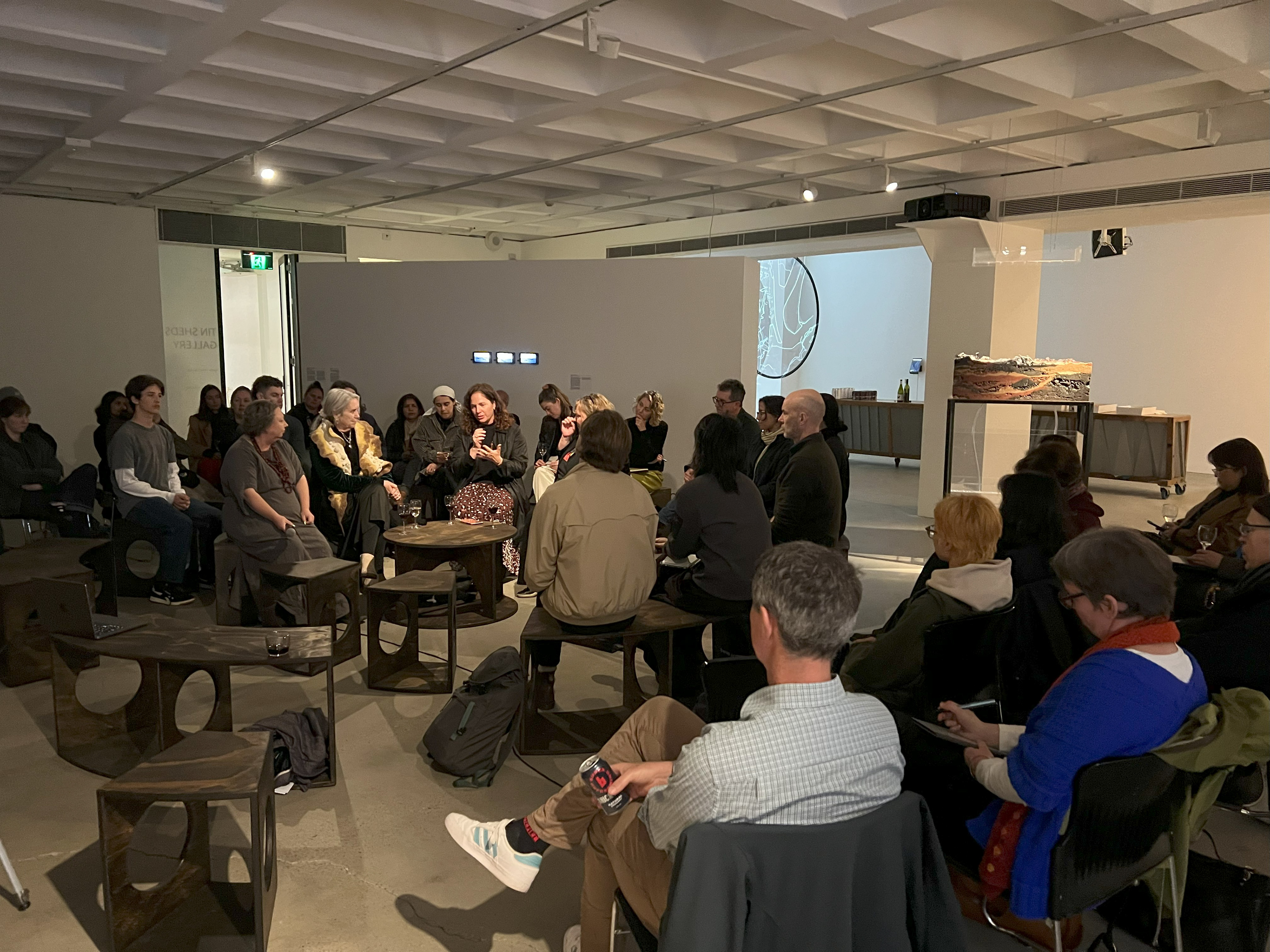
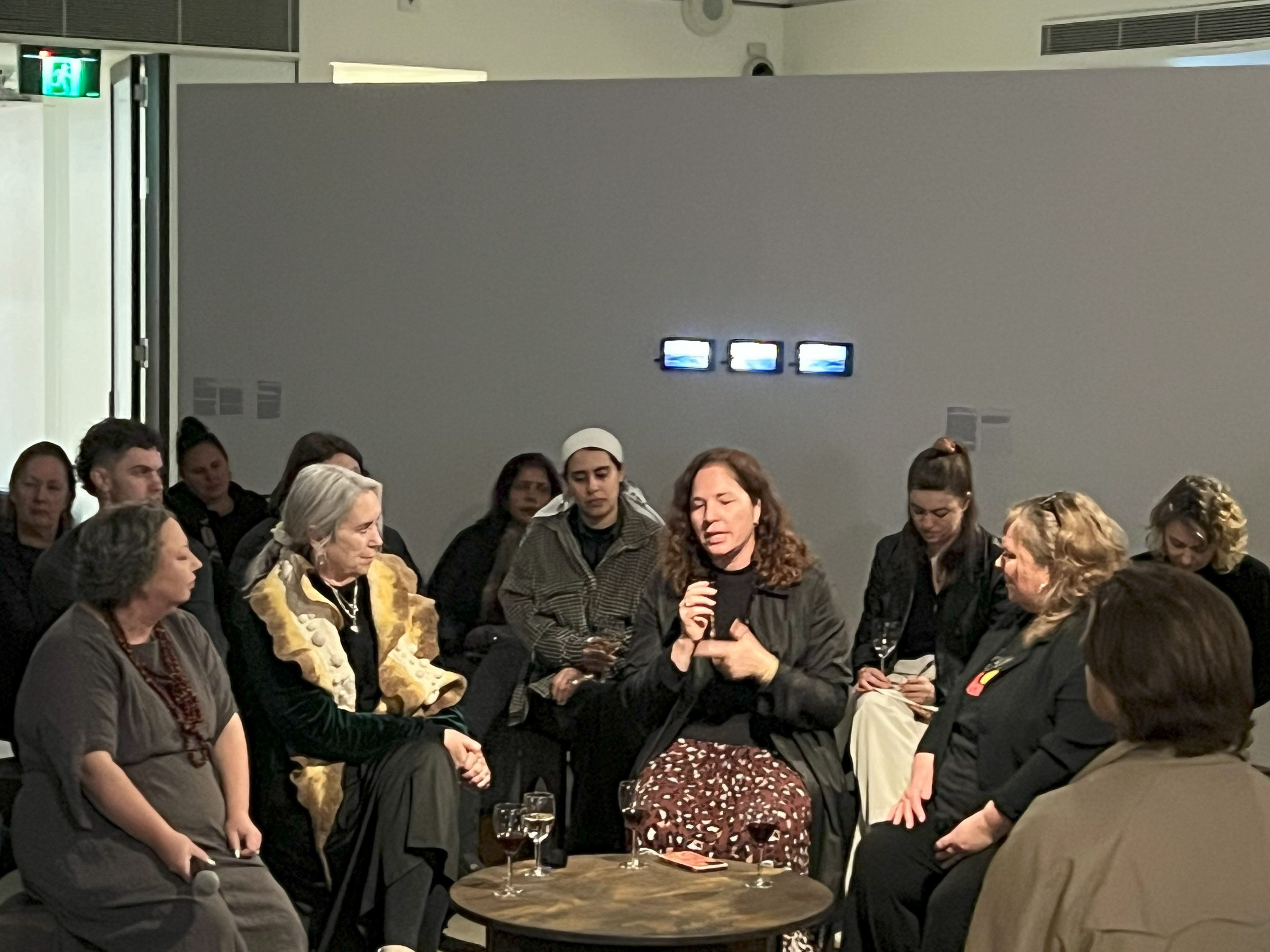
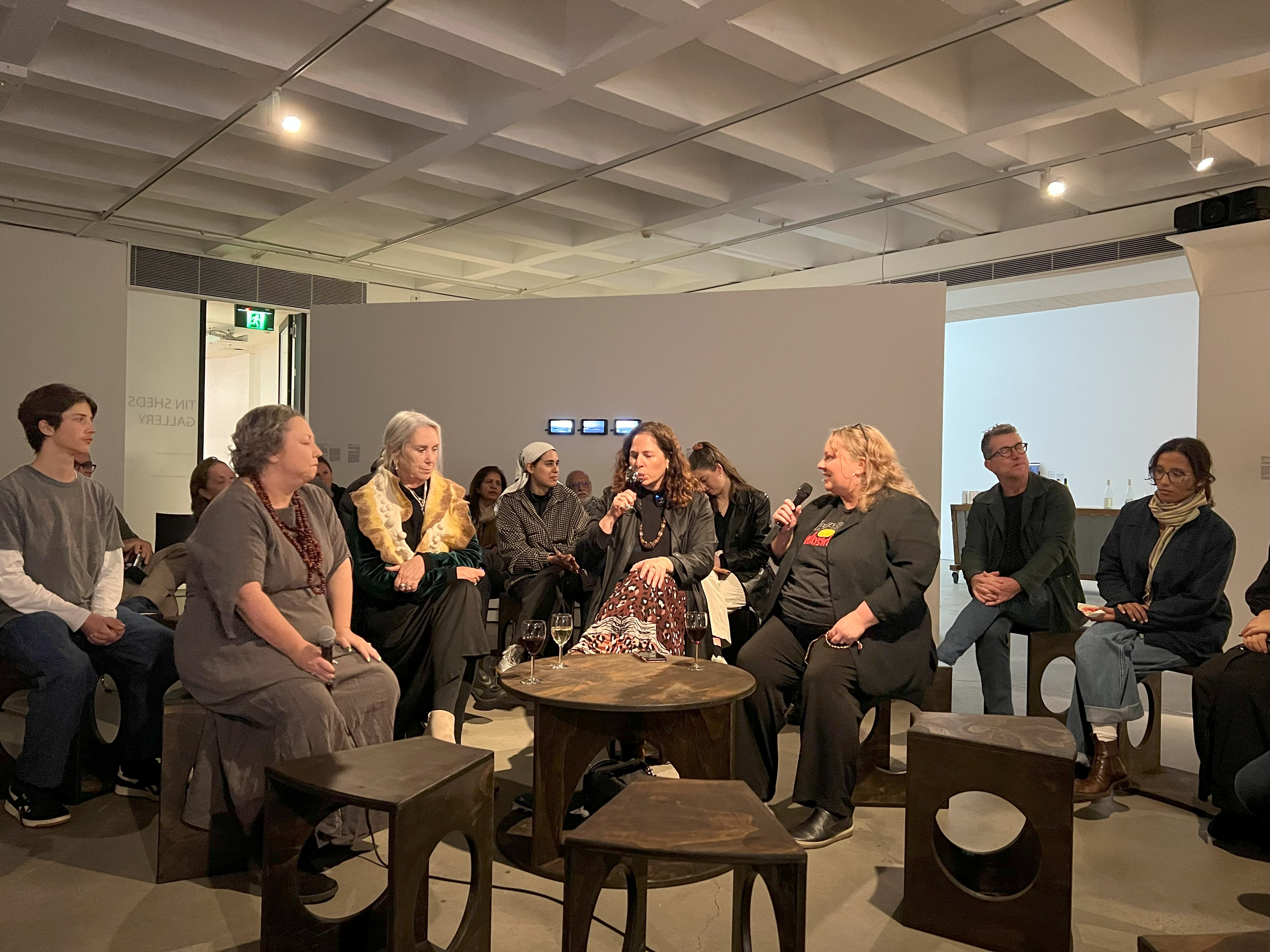
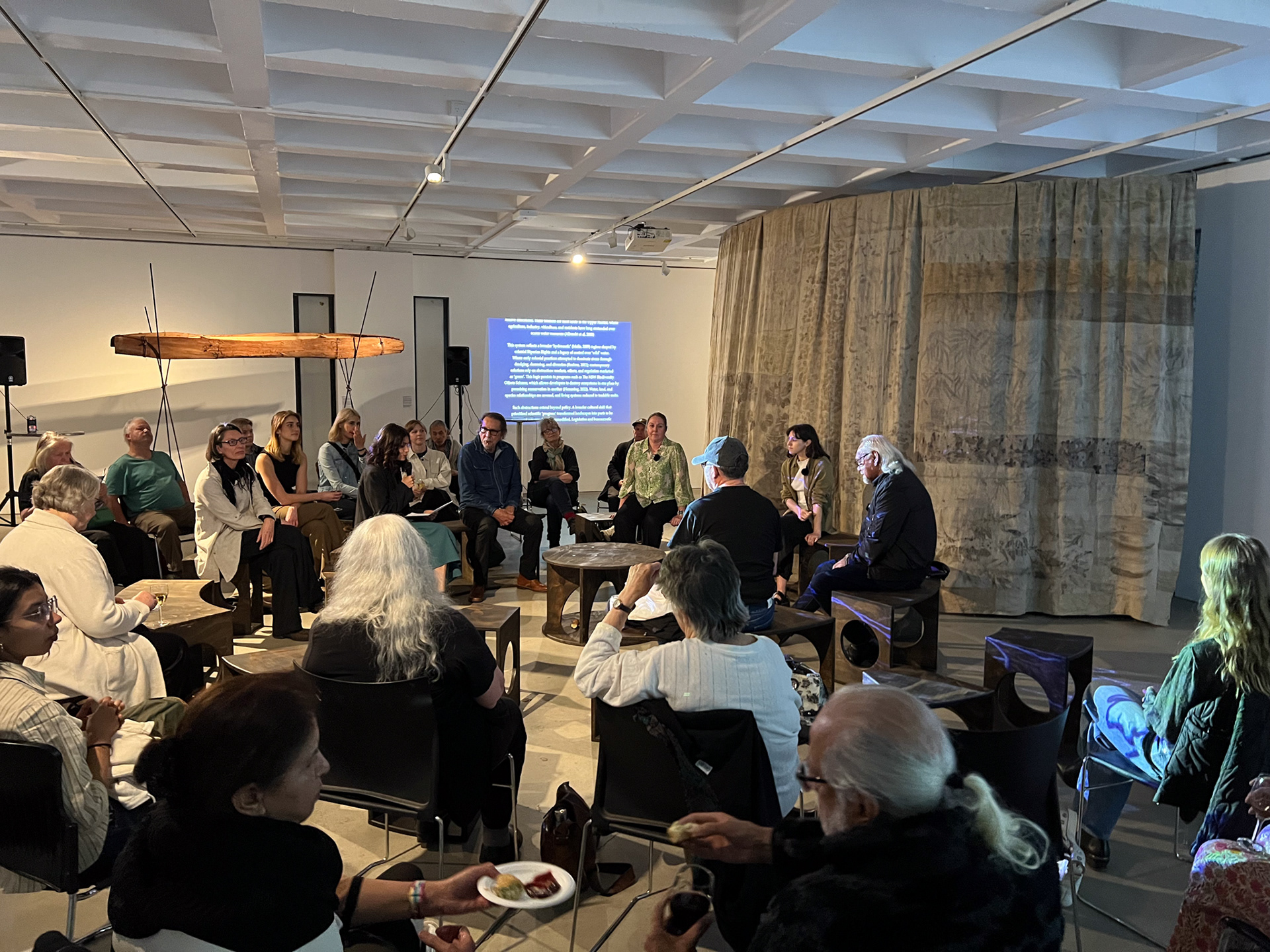
Interweaving Waters | 14 August 2025, 6 pm at Tin Sheds Gallery
brings together D’harawal, Dharug, Awabakal, Biripi, Balanggarra and Ngiyampaa Wangaaypuwan artists and practitioners to interweave water knowledge about the Burramattagal–Parramatta, Dyarubbin–Hawkesbury, Coquun–Hunter, and Boolumbahtee–Manning rivers.
Interweaving Waters highlights the importance of incorporating Indigenous knowledge and practices into spatial and artistic methodologies, as well as environmental planning. In doing so, it acknowledges the harmony of Indigenous voices, which speak in frequency with the land to create more balanced ecological practices. This unique gathering of Indigenous women seeks to accelerate action and invite the participation of all actors, including living rivers and water systems, cultural knowledge and attachment to Country, and a symbiotic relationship with multi-species worlds through a more-than-human approach, challenging the ontological division between culture, nature, space, and beyond.
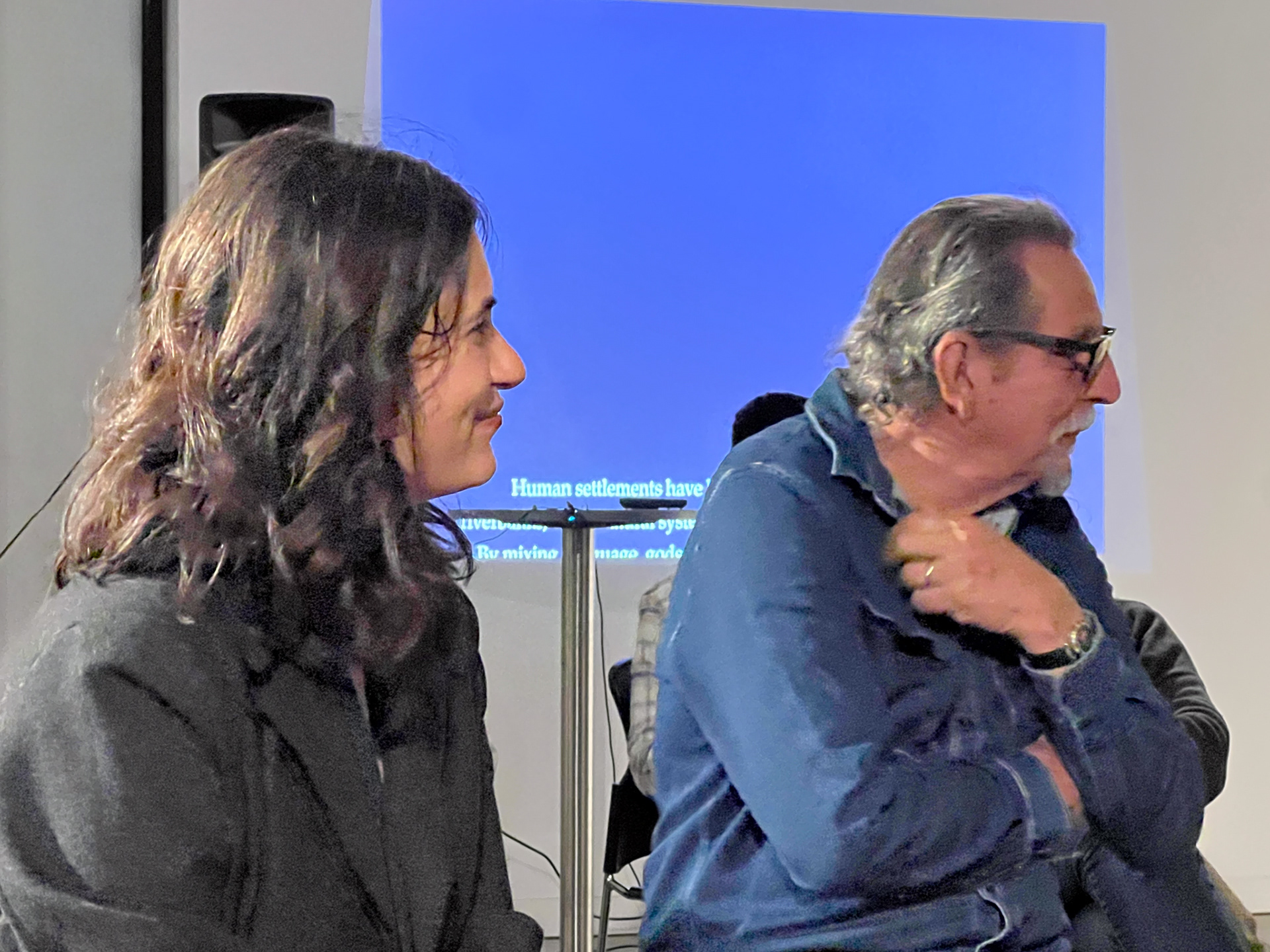
Speakers – Shellie Smith (Artist and UoN Assoc. Lecturer, Awabakal descendant), A/Prof Liz Cameron (Associate Prof. UoN, Director Belanjee, Dharug woman), Nicole Chaffey (artist, Biripi woman, Murrook Curator Director), Elle Davidson (Director at Zion Engagement and Planning; Aboriginal Planning Lecturer USydney, Balanggarra woman), Shannon Foster (D’harawal Saltwater Knowledge Keeper, Director at Bangawarra).
Elle Davidson
Elle is a Balanggarra woman from the East Kimberley and a descendant of Captain William Bligh. Elle Davidson describes herself as being caught in the cross-winds of Australia’s history.
With a passion to empower the voices of First People, Elle combines her Town Planning and Indigenous Engagement qualifications to navigate between two worlds. She understands the importance of deep listening and building a strong platform of trust for working together with the community.
Elle uses her planning and engagement skills to facilitate a co-design process that leads to culturally informed outcomes. Ultimately, she aims to create a space for reviving and enabling culture to exist in a contemporary society.
Elle is a Balanggarra woman from the East Kimberley and a descendant of Captain William Bligh. Elle Davidson describes herself as being caught in the cross-winds of Australia’s history.
With a passion to empower the voices of First People, Elle combines her Town Planning and Indigenous Engagement qualifications to navigate between two worlds. She understands the importance of deep listening and building a strong platform of trust for working together with the community.
Elle uses her planning and engagement skills to facilitate a co-design process that leads to culturally informed outcomes. Ultimately, she aims to create a space for reviving and enabling culture to exist in a contemporary society.
Shannon Foster
Dr Shannon Foster is a D’harawal eora Knowledge Keeper, interdisciplinary creative practitioner and co-founder of spatial design practice, Bangawarra. As a registered Traditional Owner of the now-Sydney region, Shannon has extensive experience in a wide range of cultural practices including song, ceremony, languages, ecological and botanical knowledges of local eco-systems, and Ancestral connections to Story and sacred Country.
Dr Shannon Foster is a D’harawal eora Knowledge Keeper, interdisciplinary creative practitioner and co-founder of spatial design practice, Bangawarra. As a registered Traditional Owner of the now-Sydney region, Shannon has extensive experience in a wide range of cultural practices including song, ceremony, languages, ecological and botanical knowledges of local eco-systems, and Ancestral connections to Story and sacred Country.
Nicole Chaffey
Nicole Chaffey is a Newcastle-based artist with an established studio practice spanning over ten years. Drawing on a deep connection to Country through her Biripai heritage, she seeks to describe her relationship to the Australian landscape by occupying a space between representation and abstraction, where the visible, known world can diffuse into one of spirituality and old knowledge.
The importance of recognising where one belongs is important to Chaffey’s practice of art making. Almost always based within the stories of her family, particularly her Aboriginal grandfather, she seeks out a place where the old history can be acknowledged, and the inheritance of an essential and dependent relationship with the land can be honoured.
Nicole Chaffey is a Newcastle-based artist with an established studio practice spanning over ten years. Drawing on a deep connection to Country through her Biripai heritage, she seeks to describe her relationship to the Australian landscape by occupying a space between representation and abstraction, where the visible, known world can diffuse into one of spirituality and old knowledge.
The importance of recognising where one belongs is important to Chaffey’s practice of art making. Almost always based within the stories of her family, particularly her Aboriginal grandfather, she seeks out a place where the old history can be acknowledged, and the inheritance of an essential and dependent relationship with the land can be honoured.
Liz Cameron
Associate Professor Liz Cameron, is a Dharug artist, spatial designer, academic, and
researcher. Her artistic endeavours involve a diverse range of mediums that actively incorporate Aboriginal practices, relationships, and knowledges.
Liz’s research primarily revolves around practice-led research within artistic domains, by utilising decolonial theories and embodied visual communications.She implements Country-guided practices that authentically reflect the essence of cultural place. Her interests delve into exploring various subjects such as identity, belonging, and the global impact of design.
Within the realm of the built environment, Liz’s research specifically focuses on cultural representation, examining the connection between Indigenous cultures and national identity.
Liz continues to build on her PhD studies in how creative making plays an important role in health and healing.
Associate Professor Liz Cameron, is a Dharug artist, spatial designer, academic, and
researcher. Her artistic endeavours involve a diverse range of mediums that actively incorporate Aboriginal practices, relationships, and knowledges.
Liz’s research primarily revolves around practice-led research within artistic domains, by utilising decolonial theories and embodied visual communications.She implements Country-guided practices that authentically reflect the essence of cultural place. Her interests delve into exploring various subjects such as identity, belonging, and the global impact of design.
Within the realm of the built environment, Liz’s research specifically focuses on cultural representation, examining the connection between Indigenous cultures and national identity.
Liz continues to build on her PhD studies in how creative making plays an important role in health and healing.
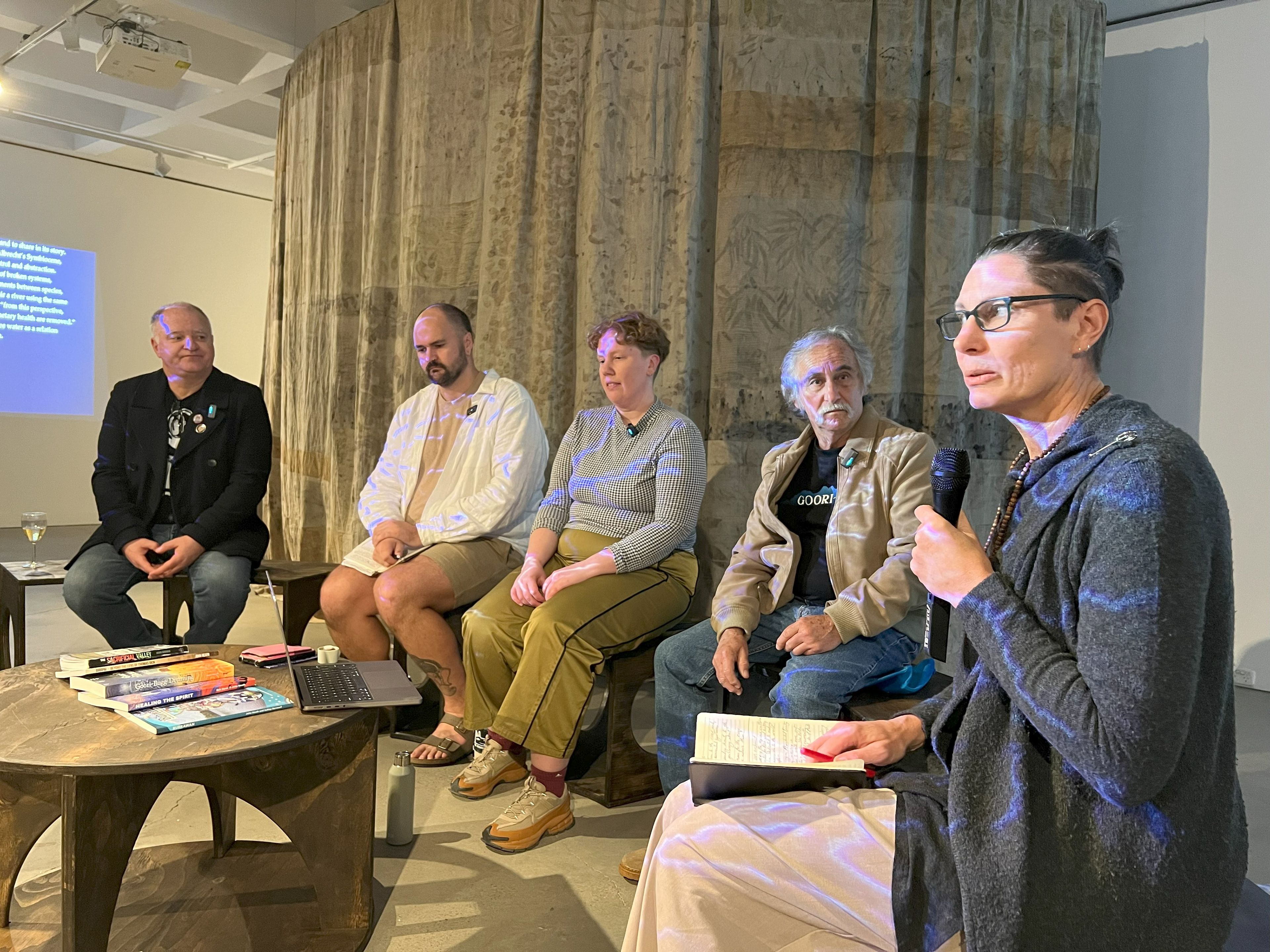
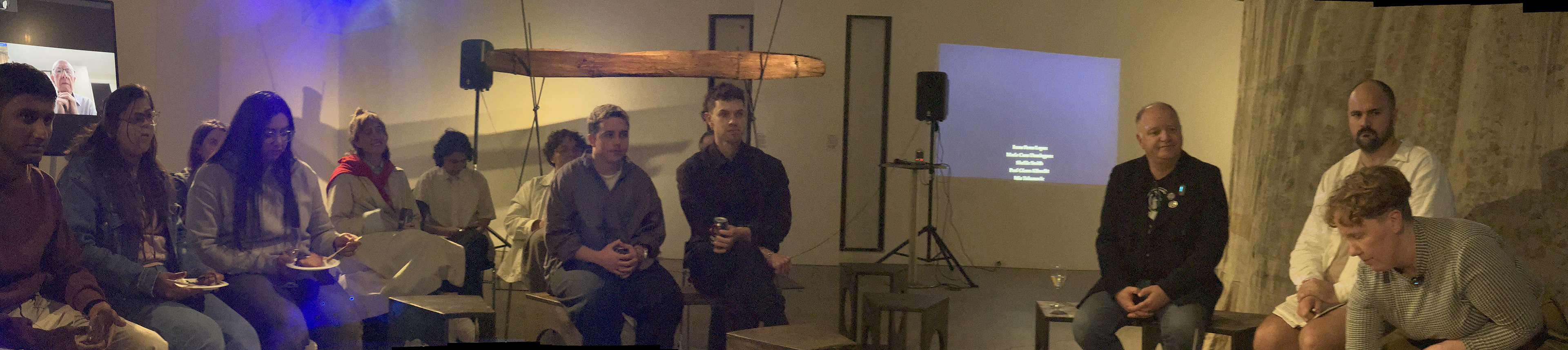
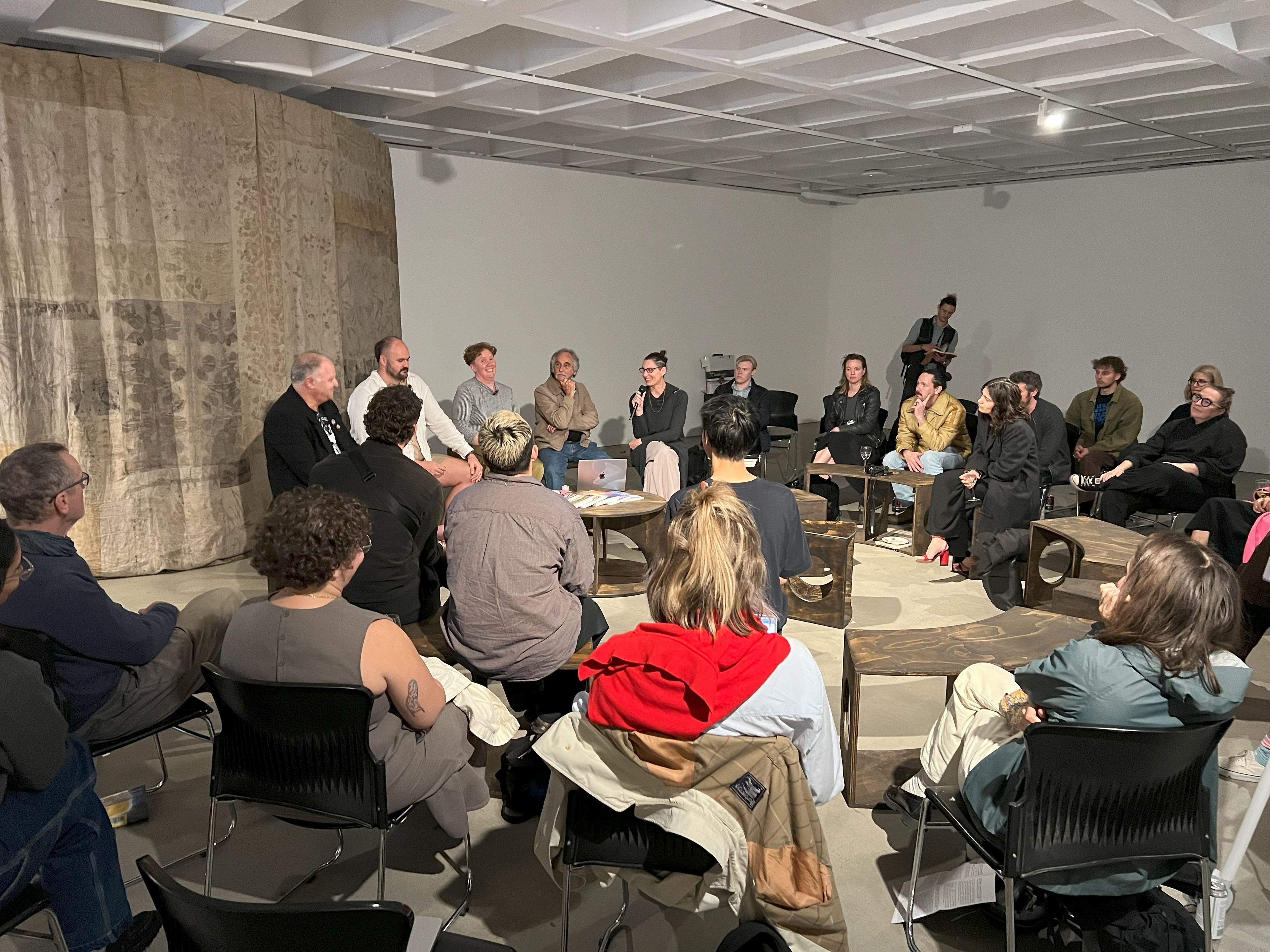
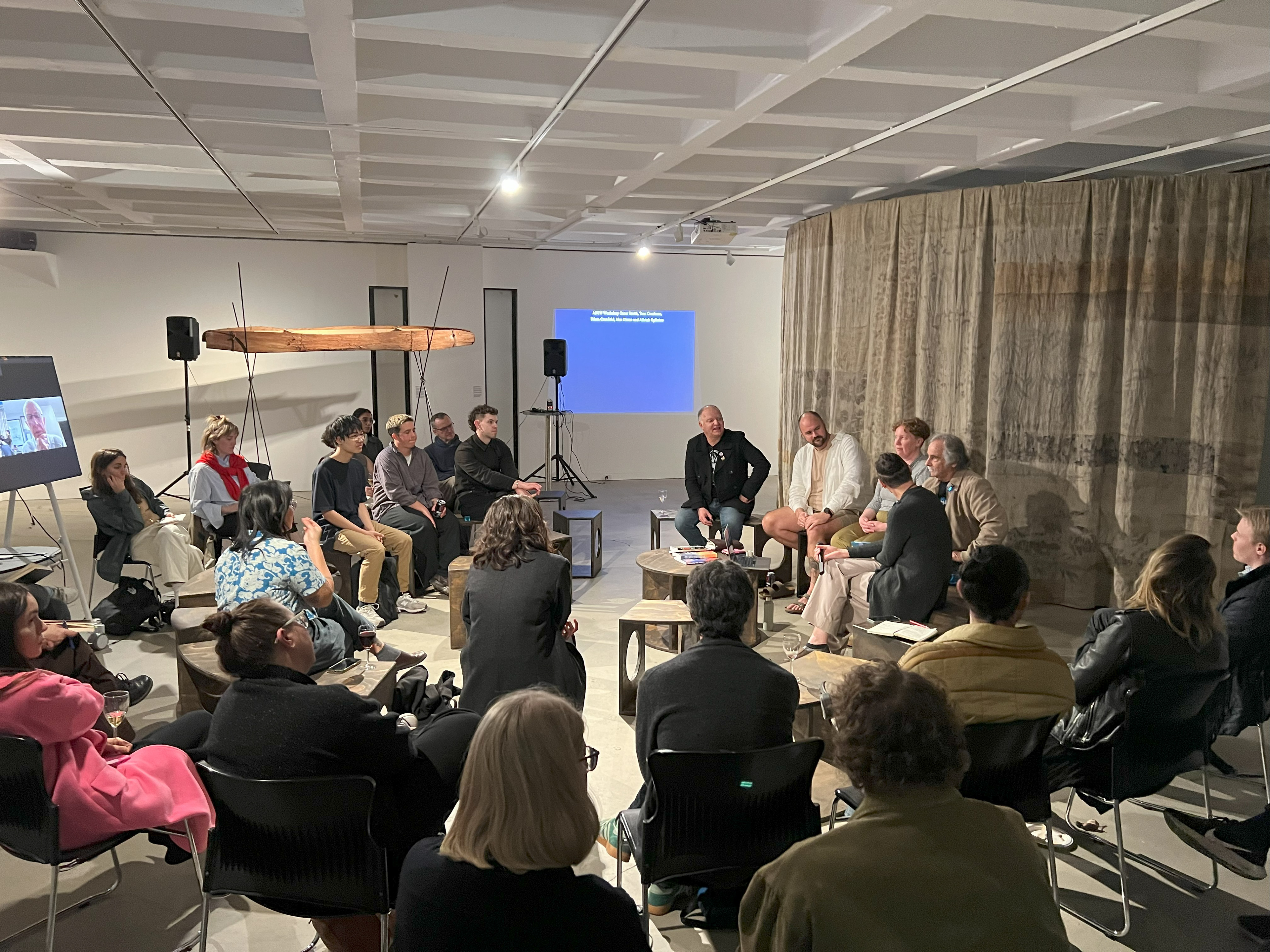
Water Forces | 28 August 2025, 6 pm at Tin Sheds Gallery
explores how climate change and the biodiversity emergency can reshape understandings of the Coquun in the 21st century.
Where the river once ebbed and flowed under nature’s force, it is now controlled by an intricate dance of water, power and capital. Water Forces explores the pressures shaping the Coquun in the 21st century – climatic, political, economic, physical, temporal and deeply historical. It traces the tensions between millennia of Indigenous stewardship and recent settler-colonial water practices, where mining, agriculture, and heavy industry continue to compete for water, even as droughts, floods, and contamination intensify. These forces are compounded by legal and technocratic systems that fragment the river from its ecology, most notably through the separation of land and water titles, and the use of biodiversity ‘credits’ to offset damage in one place by promising conservation in another.
The water crisis is approached with the same colonial-capitalist logic that created it. Where earlier responses relied on dredging, damming, and diverting the river to serve extractive economies, contemporary solutions lean on abstraction: markets, offsets, and legislation that treat water as a commodity, not kin. Tracking the drastic changes in the landscape and its hydrological systems, Water Forces calls attention to the compounding stressors acting on the Coquun-Myan and asks what it means to repair a river when the tools of repair remain bound to systems of harm.
Where the river once ebbed and flowed under nature’s force, it is now controlled by an intricate dance of water, power and capital. Water Forces explores the pressures shaping the Coquun in the 21st century – climatic, political, economic, physical, temporal and deeply historical. It traces the tensions between millennia of Indigenous stewardship and recent settler-colonial water practices, where mining, agriculture, and heavy industry continue to compete for water, even as droughts, floods, and contamination intensify. These forces are compounded by legal and technocratic systems that fragment the river from its ecology, most notably through the separation of land and water titles, and the use of biodiversity ‘credits’ to offset damage in one place by promising conservation in another.
The water crisis is approached with the same colonial-capitalist logic that created it. Where earlier responses relied on dredging, damming, and diverting the river to serve extractive economies, contemporary solutions lean on abstraction: markets, offsets, and legislation that treat water as a commodity, not kin. Tracking the drastic changes in the landscape and its hydrological systems, Water Forces calls attention to the compounding stressors acting on the Coquun-Myan and asks what it means to repair a river when the tools of repair remain bound to systems of harm.
Speakers – John Drinan (author, The Sacrificial Valley), Dr John Heath (Birrpai Traditional Owner and Senior Knowledge Holder), Dr James Wilson-Miller (Wonnarrua Elder, Gringai clan of the Wonnarua Nation), Gionni di Gravio (UoN Archivist), Therese Keogh (Artist) and Bonnie Mcbain (A/Prof UoN).
Dr John Heath
Dr John Heath is an Indigenous Research Fellow at the University of Melbourne and a senior Birrpai Goori with extensive experience in Australian Indigenous education, community development, community action research, and historical research. His research regarding the Thomas Dick Birrpai Photographic Collection (TDBPC) has resulted in media and conference presentations, as well as exhibitions, including Birrpai Yirramboi Festival 2021. John instigated the (TDBPC) Family Stakeholder Group and developed the Protocol Guidelines for Aboriginal and non-Aboriginal people working with the Thomas Dick Birrpai Photographic Collection. In 1998 he wrote the Chapter ‘Muloobinbah’ for Riverchange (Newcastle Region Public Library). His further publications include Healing the Spirit (2021), a Birrpai history co-authored with fellow Birrpai Bob Davis, Goori-Bugg Dreaming (2022) a family history, and Burrawan (2023) with Dr Ashley Barnwell.
John Drinan John has been a researcher, educator, administrator, consultant and farmer. He has worked at Hawkesbury and Tocal Agricultural Colleges and the University of Newcastle and had several appointments to national agricultural organisations. In his own business as a consultant his work was for the development of rural Australia. As a long-time farmer in the Hunter Valley, became a member of the Community Consultative Group for the Hunter-Central Rivers Catchment Management Authority Singleton Landcare, Singleton Shire Healthy Environment Group, and the Upper Hunter Mining Dialogue. His concern for the environment of the Hunter led to his book, “The Sacrificial Valley”, that documents the damage coal mining has inflicted on its natural and social environment. John and his wife, Anne, left their farm in the Hunter in 2017 for an active retirement at Bonny Hills, near Port Macquarie.
Mr Gionni di Gravio Gionni di Gravio is the University of Newcastle Archivist since 1995. He has been committed to preserving the region’s cultural heritage and making archives and cultural sources accessible to global audiences, and is a strong advocate for regional communities and institutions. He has also been a strong advocate supporting Aboriginal history. In his role at the University, he has inspired and supported many students, academics, and colleagues.
Gionni wants to see the next generation of creative ‘workers’ in new industries associated with the GLAM sector (Galleries, Libraries, Archives and Museums). He has pioneered low-cost useful methods and technologies to make archival treasures freely accessible to the wider world. He founded the UON’s GLAMx Living Histories Digitisation Lab in 2017. He sees the intrinsic value of archives and cultural sources to better understand the world we live.
Gionni wants to see the next generation of creative ‘workers’ in new industries associated with the GLAM sector (Galleries, Libraries, Archives and Museums). He has pioneered low-cost useful methods and technologies to make archival treasures freely accessible to the wider world. He founded the UON’s GLAMx Living Histories Digitisation Lab in 2017. He sees the intrinsic value of archives and cultural sources to better understand the world we live.
Therese Keogh
Therese Keogh is an artist and writer currently living in Awabakal Country. Therese works collaboratively through writing and research projects and is invested in collective imaginaries to create more just relations to lands, waters and people. Their collaborative work includes facilitating ‘Magnetic Topographies’ with Clare Britton and Kenzee Patterson—looking to collective pedagogies of place—and ‘Written Together’—a shared workshop for non-normative writing in arts research. Therese holds a BFA from Monash University, an MFA from Sydney College of the Arts, and an MA in Geography from Queen Mary University of London. Therese is currently undertaking a PhD at The Victorian College of the Arts, University of Melbourne.
Taylor Coyne
Taylor Coyne is a PhD candidate in Human Geography at UNSW Sydney whose research explores the hidden architectures of water in the city. His doctoral project, Swamp City, investigates how drains and swamps reveal colonial legacies and multispecies futures through sensory, critical, and decolonial methods and treats stormwater infrastructures as cultural and ecological archives, revealing how drains, swamps, and wetlands embody histories of power, and multispecies entanglement. Working with Indigenous-led studio Yerrabingin, Taylor develops design methodologies that ground architectural and landscape practice within Country, advancing ecological thinking alongside cultural responsibility. He teaches across geography, design, and environmental humanities, guiding students to approach the built environment as a living system shaped by both material infrastructure and more-than-human relationships. By drawing attention to stormwater as both structure and story, Taylor reimagines urban geographies not as static form but as a collection of dynamic hydrosocial processes, offering pathways toward futures of pluriveralism, care, justice, and entangled belonging.
Taylor Coyne is a PhD candidate in Human Geography at UNSW Sydney whose research explores the hidden architectures of water in the city. His doctoral project, Swamp City, investigates how drains and swamps reveal colonial legacies and multispecies futures through sensory, critical, and decolonial methods and treats stormwater infrastructures as cultural and ecological archives, revealing how drains, swamps, and wetlands embody histories of power, and multispecies entanglement. Working with Indigenous-led studio Yerrabingin, Taylor develops design methodologies that ground architectural and landscape practice within Country, advancing ecological thinking alongside cultural responsibility. He teaches across geography, design, and environmental humanities, guiding students to approach the built environment as a living system shaped by both material infrastructure and more-than-human relationships. By drawing attention to stormwater as both structure and story, Taylor reimagines urban geographies not as static form but as a collection of dynamic hydrosocial processes, offering pathways toward futures of pluriveralism, care, justice, and entangled belonging.
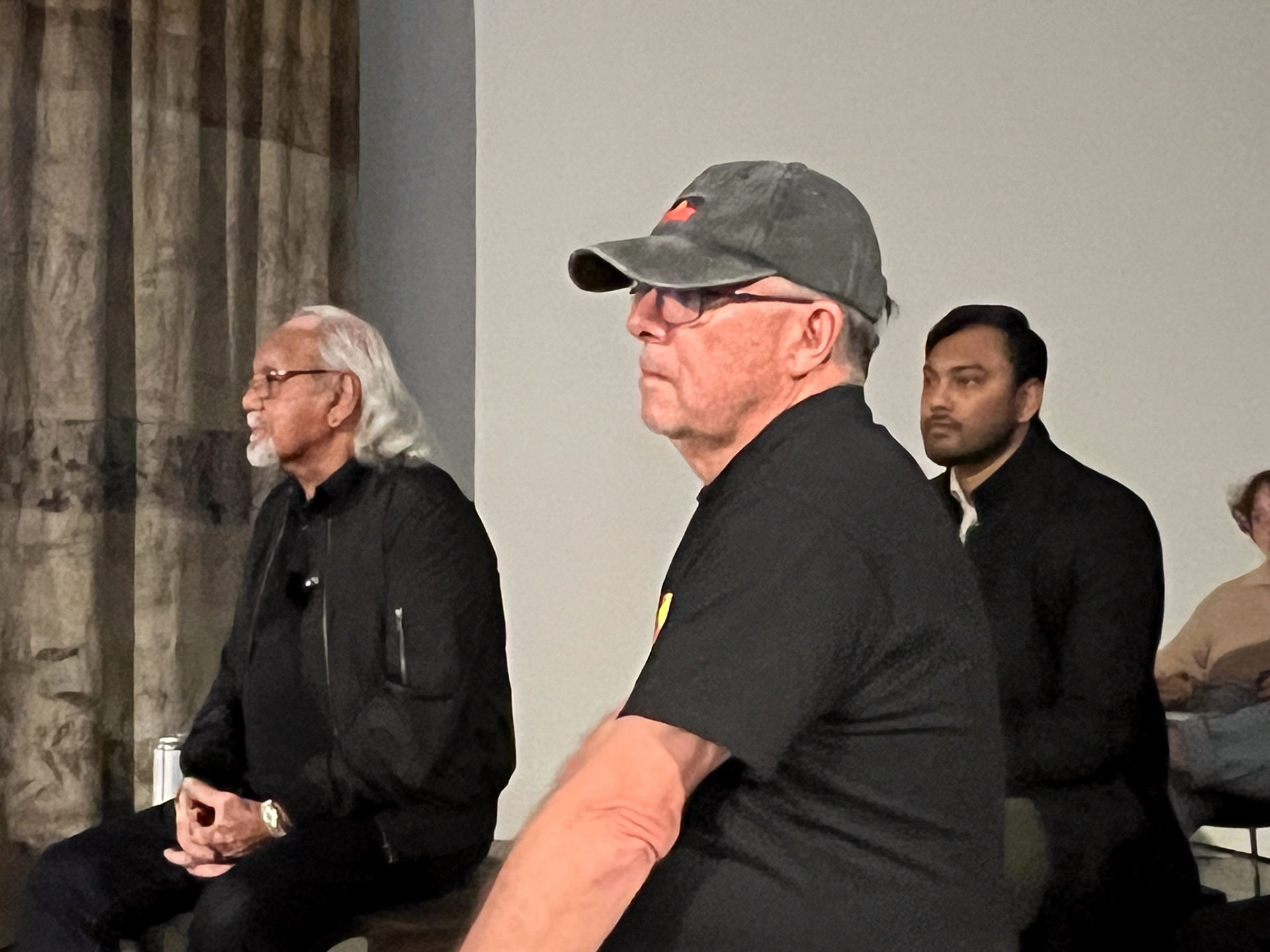
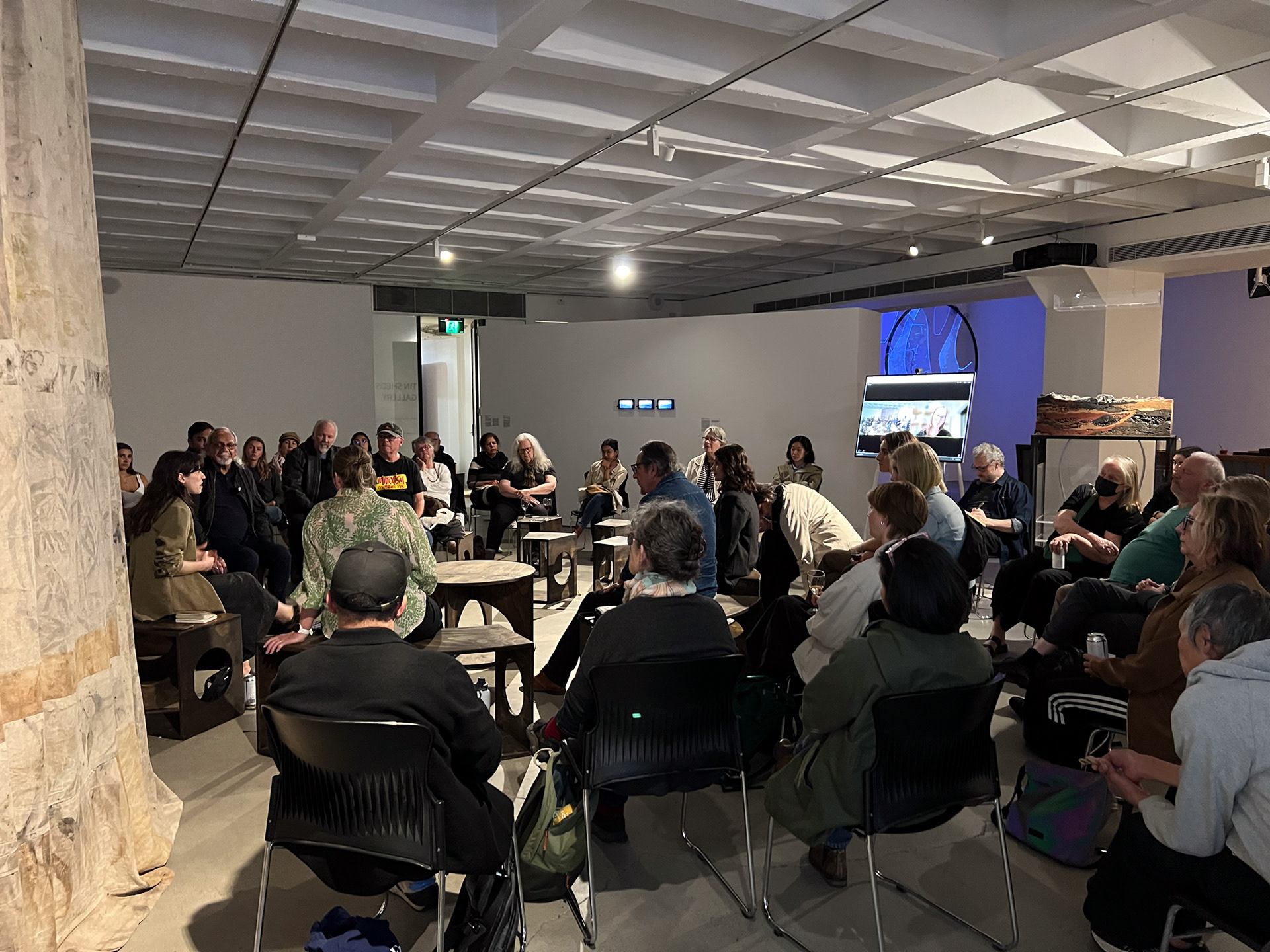
Water Ecologies – 4 September 2025, 6 pm at Tin Sheds Gallery
engages with ecological and hydrosocial narratives in the Coquun/Myan.
Ecology describes the entangled relationships between living organisms and their environments, dynamic systems shaped through interaction, adaptation, and exchange. Water Ecologies traces the ecologies at play in the Hunter, attending to the interrelationships that shape and are shaped by the Coquun-Myan. The River finds confluence in a dense tangle of cultural, linguistic, legal, environmental, economic, and political influences. These overlapping ecologies – artificially fragmented through colonial and scientific paradigms – cannot be understood in isolation. Together, they form a shifting nexus of conditions that governs who has access to water, and who does not.
Taking cues from Donna Haraway’s sympoiesis and Glenn Albrecht’s Symbiocene, Water Ecologies reimagines the Coquun and its catchment not as a set of broken, competing systems, but as one interdependent ecology. It traces the river as it moves through bodies, infrastructures, memories, and futures—asking how we might live with the river, rather than upon it. In doing so, it challenges us to consider water not as resource or backdrop, but as a living relation that holds us all in common.
Ecology describes the entangled relationships between living organisms and their environments, dynamic systems shaped through interaction, adaptation, and exchange. Water Ecologies traces the ecologies at play in the Hunter, attending to the interrelationships that shape and are shaped by the Coquun-Myan. The River finds confluence in a dense tangle of cultural, linguistic, legal, environmental, economic, and political influences. These overlapping ecologies – artificially fragmented through colonial and scientific paradigms – cannot be understood in isolation. Together, they form a shifting nexus of conditions that governs who has access to water, and who does not.
Taking cues from Donna Haraway’s sympoiesis and Glenn Albrecht’s Symbiocene, Water Ecologies reimagines the Coquun and its catchment not as a set of broken, competing systems, but as one interdependent ecology. It traces the river as it moves through bodies, infrastructures, memories, and futures—asking how we might live with the river, rather than upon it. In doing so, it challenges us to consider water not as resource or backdrop, but as a living relation that holds us all in common.
Speakers – Prof. John Maynard (Historian, Worimi man), Prof. Glenn Albrecht (Environmental philosopher, Murdoch University), Dr James Wilson-Miller (Wonnarrua Elder, Gringai clan of the Wonnarua Nation), Emily O’Gorman (Environmental historian, Ass Prof Macquarie University), Jo Lynch (Artist and activist) and Dr Alex Callen (Lecturer UoN, vegetation and restoration ecologies)
John Maynard's journey began with a desire to piece together a family history and has now seen the University of Newcastle Professor become one of the world's most prolific and respected voices on Indigenous history, internationally regarded as an expert on issues ranging from military involvement to political activism and sport.
This scholarship is reflected in his position on a number of boards and councils - including the Executive Committee of the Australian Historical Association, the New South Wales History Council, the Indigenous Higher Education Advisory Council and the Australian Research Council College of Experts. He is also Deputy Chairman of the Australian Institute of Aboriginal and Torres Strait Islander Studies (AIATSIS).
From the Worimi People of Port Stephens, Maynard was inspired by his family history to write a book on Indigenous identities in racing- titled, Aboriginal Stars of the Turf, recognised by Dymocks Reader Choice Award and featuring his father, renowned jockey Merv Maynard.
His later works, including The Aboriginal Soccer Tribe, Fight for Liberty and Freedom, Light and Shade (for the National Library), and Living with Locals (with his wife, acclaimed historian Victoria Haskins), continue to weave Indigenous voices, lived histories, and cultural resilience into broader historical landscapes.
His scholarship also honors the legacy of his grandfather, a noted political activist and the President of the Australian Aboriginal Progressive Association (AAPA), Fred Maynard, was one of those people fighting for self-determination in this period.
Glenn Albrecht is an environmental philosopher whose work has given language to some of the deepest emotions of the Anthropocene. Formerly Professor of Sustainability at Murdoch University, and now an honorary fellow in the School of Geosciences at the University of Sydney, he has long explored the intricate connections between human health and ecosystems, both theoretical and applied.
He has pioneered the research domain of ‘psychoterratic’ or earth-related mental health conditions with his concept of ‘solastalgia’— the experience of distress caused by negative environmental change — a concept that has since been adopted internationally in academic research, law, creative practice, and social discourse.
Glenn's most recent work develops the paradigm of the 'Symbiocene', a future state where humans symbiotically re-integrate with the rest of life in nature. In anticipation of his next book, 'The Symbiocene: Our Only Future' (CUP 2026), he is contributing to national and international public debate on key issues connected to the human-nature relationship. Through his work, Glenn has given voice to feelings of loss, care, and resilience in the face of a rapidly changing planet.
Dr James Wilson-Miller
Dr James Wilson-Miller is a direct bloodline descendent of the Gringai Clan of the Wonnarua Nation in the Hunter River Valley, NSW. He retired as curator of Koori History, Culture and Design at the Powerhouse Museum, Sydney.
He is an experienced researcher being a respected and well-known Koori historian and the author of the once best seller, ‘Koori: A Will To Win’, and contributed 3 chapters to a prestigious teaching textbook, “Teaching The Teachers”.
He was employed by the University of New South Wales as the Assistant Principal Consultant on the "Teaching the Teachers: Indigenous Australian Studies Project of National Significance" and He was also a member of the Aboriginal Studies Examination Board.
James Wilson-Miller is also experienced at working with Aboriginal people and is respected by Aboriginal Elders, educators, and community members as well as his
non-Aboriginal colleagues. He was a member of the NSW Centenary of Federation History and Civics Committee, NSW, the former President of the national Aboriginal Studies Association, Former President of the Aboriginal Education Council of NSW Inc, was a former President of the New South Wales Aboriginal Education Consultative Group of Southern Sydney.
Associate Professor Emily O’Gorman is an environmental historian whose interdisciplinary research is situated in environmental history and the broader environmental humanities, primarily concerned with contested knowledges within broader cultural framings of authority, expertise, and landscapes.
Much of her work centres on the Murray–Darling Basin, a site of layered environmental contestation. Drawing on archival research as well as interviews, Emily has concentrated on two key subjects: environmental histories of rivers and wetlands, and scientific approaches to weather and climate from the mid-nineteenth century to the present, adding temporal depth to understandings of the waterscapes of this region.
Currently Associate Professor in History and Archaeology in the School of Humanities
at Macquarie University, Emily has held international fellowships, including at the Rachel Carson Centre in Munich, and is an Australian Research Council Future Fellow. Her research is both analytical and reflective, seeking to position environmental history as a critical partner in the humanities, and to frame landscapes as active sites of memory, authority, and cultural negotiation.
Alex Callen is a restoration ecologist whose work focusses on recovering threatened species using their own resilience characteristics and more broadly using the ecological integrity of natural ecosystems to limit the impact of anthropogenic invasions. She is the Assistant Director of the Centre for Conservation Science at the University of Newcastle and co-lead of the Amphibian ICU which exemplifies the IUCN’s (International Union for the Conservation of Nature) commitment to OnePlan – the integration of wild-space and lab-space conservation efforts to conserve biodiversity.
Alex’s work bridges science and practice, collaborating with industry and government to create, manage, and monitor habitats for threatened species recovery across natural and industrial landscapes. Most of this water-space conservation centers on the recovery of frogs – culturally recognized as indicators of seasonal change, but also to alterations in water flows and water quality. To this end, Alex has worked to improve understanding of the impacts to frogs where ephemeral springs bring life to the Hunter River in the Barrington Tops, and to improve frog habitat in the industrially challenged coastal wetlands at the mouth of the Hunter River.
Jo Lynch
Jo Lynch is and environmentalist and Fine Arts graduate of Hunter TAFE and Newcastle University; she’s a second-generation Australian with Irish heritage who was raised on Wonnarua Country near the Hunter-Williams river.
Jo has volunteered and worked in community organising, environmental and climate advocacy on Awabakal Country, Muloobinba since 2016. Between 2018-2024, whilst Coordinator of the Hunter Community Environment Centre she campaigned against pollution impacts facing Lake Macquarie, the Upper Hunter and Upper Cox’s catchments from coal-fired power stations.
Jo has volunteered and worked in community organising, environmental and climate advocacy on Awabakal Country, Muloobinba since 2016. Between 2018-2024, whilst Coordinator of the Hunter Community Environment Centre she campaigned against pollution impacts facing Lake Macquarie, the Upper Hunter and Upper Cox’s catchments from coal-fired power stations.
In her current role as Newcastle Community Coordinator with Lock the Gate Alliance, a national anti-coal and coal-seam gas network, she coordinates a climate resilience initiative focused on the suburbs of Throsby Creek. Jo is also the Secretary of the Hunter Jobs Alliance, an alliance between NSW environment groups and trade unions advocating for a just transition and regional renewable prosperity.
Wake up the Snake | 16th September 2025, 6 pm at Tin Sheds Gallery
explores the rivers’ right to be recognised as a living Ancestral Serpent Being.
Wake up the Snake is a provocation to wake up the consciousness of the people, our people, all people, across our region, our state, our nation and indeed the world. As planetary citizens we see and understand that Country and living water systems are changing. We look across our nation and planet, recognizing that the meta crisis – borne of modernity itself – can be addressed by walking together – starting with all Australians. Wake up the Snake, is our intent to respect, honour and collaboratively celebrate the law of the land, within precautionary principles and the public interests of others to provide remedies to the laws of modernity. To protect as we have always done from the beginning of time, to protect the commons for the common interests and wellbeing of all of us. Anne Poelina’s presentation will include a short film (6 mins) ‘Singing Yoongoorrookoo’
Speakers – Anne Poelina (Nyikina Warrwa woman, Chair Martuwarra Fitzroy River Council, Professor Notre Dame, WA), Arabela Douglas (Minyungbul woman, CEO Currie Country Group Aboriginal Corporation).